HuēKin Fest
A day of food, live art, music, rest, growth, and celebration. Five color zones give you different ways to experience the festival. Move through them in any order and stay as long as you like.
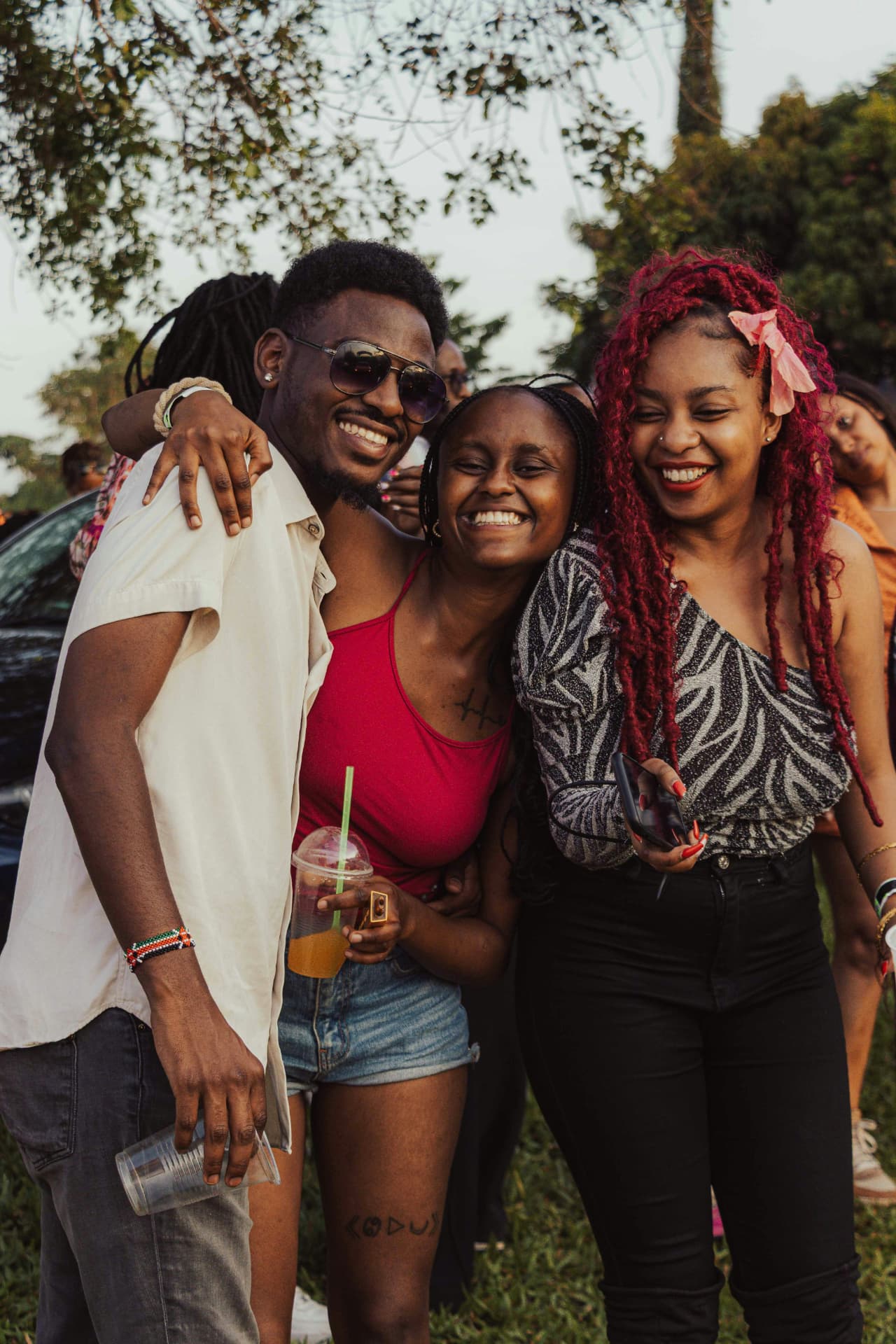
Warmth, belonging, and the energy of gathering with your people.
In the room
Food from local vendors, shared tables, welcoming music, and easy ways to meet people.
How we hold it
Come hungry. Stay with the people you know or make room for someone new. Nothing feels like forced networking.
Joy, curiosity, and the freedom to try something new.
In the room
Live artists at work, hands on making, playful installations, and creative surprises throughout the zone.
How we hold it
Watch, join in, or make something of your own. There is no right way to take part.
Calm, ease, and space to let your energy settle.
In the room
Lounge seating, water, quieter music, soft light, and room to pause without leaving the festival.
How we hold it
Rest is enough. Nobody asks you to talk, share, or turn the pause into a lesson.
Renewal, possibility, and choosing what you want to grow next.
In the room
A green space with optional tents for short leadership sessions, reflection, and practical tools you can choose to enter.
How we hold it
Every session is opt in. You can join a conversation, pick up a resource, or simply enjoy the zone.
Joy, pride, and holding many feelings as the day comes together.
In the room
Live music, performances, dancing, and a closing celebration that recognizes HuēKin program graduates.
How we hold it
Celebrate in your own way. Move close to the stage, stay at the edge, or simply take in the moment.
Plan your day
Tell us what you love, how much energy you have, and how long you can stay. We'll suggest a route through the five zones made for you.
Color in our own traditions
Our communities have our own color languages. In kente cloth, woven by Asante and Ewe weavers in Ghana and Togo, colors and patterns carry meaning about status, ancestry, and identity. HuēKin Fest doesn't replace any of that. If a color means something different to you, your meaning comes first.
The day closes in celebration.
The Violet celebration zone brings the festival together with music, performance, and recognition of HuēKin program graduates. Move through the colors in any order, then close the day with us.
The festival
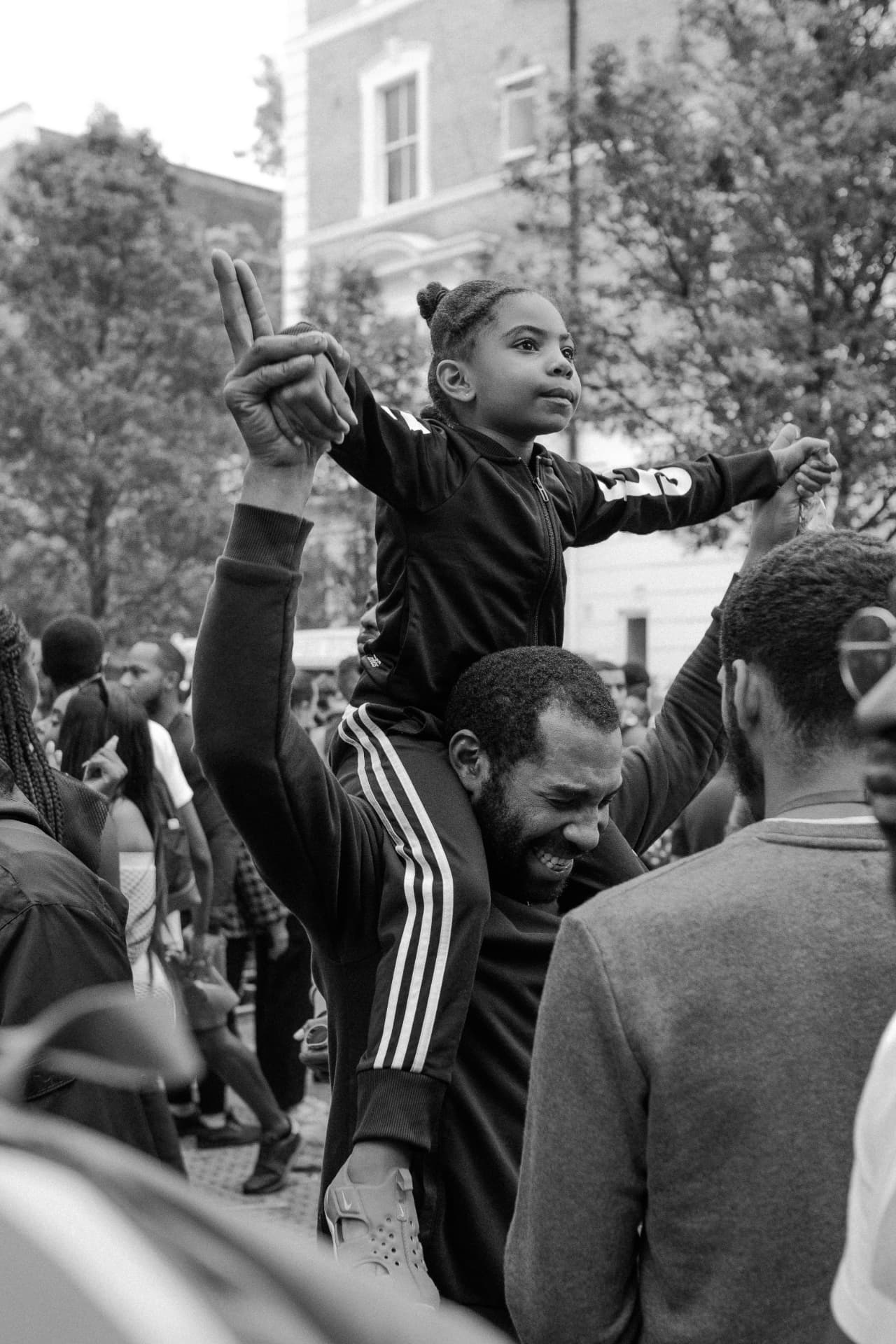
One day, five zones, and many ways to take part.
Why these colors
Every HuēKin Fest zone starts with a color, and each color was chosen for the feelings research connects to it. Here's what the science says, how we use it, and where the science stops. The numbers link to our sources at the bottom of the page.
- Welcome and communityRed
What the research says
Across 30 countries and more than 4,500 people, red was the color most linked to anger and to love, and it ranked among the most emotionally charged colors of all. Studies also show that when people feel angry, they're more likely to see red. In high pressure settings, red tends to put people on alert.
How we use it
Red's strong emotional energy makes it the welcome and community zone. Food, shared tables, and music turn that energy toward warmth, love, and connection. Clear wayfinding and a generous welcome keep the saturated red lively without making the zone feel high pressure.
- DiscoveryYellow
What the research says
Yellow is linked to joy in countries all over the world. In one study, college students described it as lively and energetic and connected it to the sun and summer. The link is strongest in colder, rainier places, which matters here in Boston. One caution: muddy or greenish yellows tend to feel unpleasant, so the shade matters.
How we use it
Yellow carries the discovery zone's joy, curiosity, and play. We keep it bright and clear around live art and hands on making, giving people permission to notice something new and try it for themselves.
- Rest and releaseBlue
What the research says
Blue is one of the most pleasant colors people rate. In one study, people connected it to relaxation and peace, and also to sadness and loneliness. English even has a phrase for that: feeling blue. Blue settings have also been linked to feeling open and safe enough to explore.
How we use it
Blue can hold calm and grief at the same time, so it shapes the rest and release zone. Deeper, softer blues, lounge seating, water, and quieter music make space to settle without asking anyone to explain what they feel.
- GrowthGreen
What the research says
In the same college study, green got the most positive responses of any color, almost 96 percent. Most people described relaxation and calm, and they connected green to nature. Green also ranks among the most pleasant hues.
How we use it
Green's connection to nature, calm, and positive feeling grounds the growth zone. Optional, opt in tents offer short leadership sessions, reflection, and practical tools. The rest of the zone remains open for anyone who simply wants to enjoy the space.
- CelebrationViolet
What the research says
Purple has the most mixed research of the five, and that works in our favor. People in one study linked it to calm and happiness, and also to sadness, tiredness, power, and fear. It also ranks among the more pleasant hues.
How we use it
Violet can carry happiness, power, calm, and complexity at once. That range belongs in the celebration zone, where music, performance, dancing, and recognition of program graduates close the day without asking every feeling to be the same.
What color psychology can and can't tell us
- Color is linked to feelings. It doesn't control them. The research shows strong, consistent patterns in how people connect colors and emotions. The evidence that a color on its own changes how you feel or act is weaker and more mixed. Some of the studies above are small or were done with college students, so we treat them as guidance, not rules.
- Context changes meaning. The same red can mean love at a party and danger on a warning sign. Researchers call this color in context. That's why every zone also has food, music, art, performance, or hosts who set the tone.
- Shade matters as much as hue. How bright and how saturated a color is shapes how pleasant and how energizing it feels, sometimes more than the hue itself.
- Where you're from matters. The big patterns hold across countries, and local differences are real too. Language and geography both shape how people connect color and emotion.
References
- Elliot, A. J., & Maier, M. A. (2014). Color psychology: Effects of perceiving color on psychological functioning in humans. Annual Review of Psychology, 65, 95-120. doi.org/10.1146/annurev-psych-010213-115035
- Fetterman, A. K., Robinson, M. D., Gordon, R. D., & Elliot, A. J. (2011). Anger as seeing red: Perceptual sources of evidence. Social Psychological and Personality Science, 2(3), 311-316. doi.org/10.1177/1948550610390051
- Fetterman, A. K., Robinson, M. D., & Meier, B. P. (2012). Anger as "seeing red": Evidence for a perceptual association. Cognition and Emotion, 26(8), 1445-1458.
- Jonauskaite, D., Abdel-Khalek, A. M., Abu-Akel, A., Al-Rasheed, A. S., Antonietti, J.-P., Ásgeirsson, Á. G., . . . Mohr, C. (2019). The sun is no fun without rain: Physical environments affect how we feel about yellow across 55 countries. Journal of Environmental Psychology, 66, 101350. doi.org/10.1016/j.jenvp.2019.101350
- Jonauskaite, D., Abu-Akel, A., Dael, N., Oberfeld, D., Abdel-Khalek, A. M., Al-Rasheed, A. S., . . . Mohr, C. (2020). Universal patterns in color-emotion associations are further shaped by linguistic and geographic proximity. Psychological Science, 31(10), 1245-1260. doi.org/10.1177/0956797620948810
- Kaya, N., & Epps, H. H. (2004). Relationship between color and emotion: A study of college students. College Student Journal, 38(3). eric.ed.gov/?id=EJ706686
- Mehta, R., & Zhu, R. (2009). Blue or red? Exploring the effect of color on cognitive task performances. Science, 323(5918), 1226-1229. doi.org/10.1126/science.1169144
- Ross, D. H. (1998). Wrapped in pride: Ghanaian kente and African American identity. UCLA Fowler Museum of Cultural History.
- Valdez, P., & Mehrabian, A. (1994). Effects of color on emotions. Journal of Experimental Psychology: General, 123(4), 394-409. doi.org/10.1037/0096-3445.123.4.394